When the AP Chemistry exam arrives, a single misstep can ripple through several problems, eroding confidence and lowering your score. In the rush to solve complex equations, students often repeat the same five pitfalls: misreading the problem, ignoring stoichiometric coefficients, skipping unit conversions, mishandling negative signs, and misapplying balanced equations. By tackling these mistakes head‑on, you can turn a nerve‑wracking test into a series of manageable tasks.
1. Skim the Prompt, Not the Solution
Many students dive straight into calculations, treating the problem like a math puzzle. In reality, a chemistry question hides crucial details—such as temperature, pressure, or the phase of reactants—in the text. Start every problem with a quick scan: note the reactants, products, and any conditions. For example, a question on gas volume must be solved with the ideal gas law; overlooking a “25 °C” value could misplace the entire calculation.
2. Treat Coefficients as Numbers, Not Nicknames
Stoichiometry is the backbone of AP Chemistry. A common error is ignoring or misreading the numbers in a balanced equation. If you write a balanced equation with coefficients 2 H₂ + O₂ → 2 H₂O, but then use a 1:1 ratio in your math, the error propagates. Always write the coefficients next to the variables before moving to conversions. When in doubt, double‑check your ratio by back‑solving: does the mass balance? This simple habit catches a mistake that can cost a full question’s worth of points.
3. Convert Units Like a Detective
Unit conversion slips are a frequent source of loss. For instance, converting 10 mol of CO₂ to grams requires the molar mass—44 g/mol. If you forget to multiply, you’ll report 10 g instead of 440 g, a 44‑fold error. On the exam, pause for a moment to write down the necessary conversion factor: “g / mol” or “L / K·atm.” Many students overlook that the ideal gas law expects pressure in atm and volume in liters; a wrong unit can turn a correct answer into a zero.
4. Negatives Are Not Optional
Chemical equations often involve loss of electrons or decrease in oxidation state. Some students treat negative signs as cosmetic, overlooking their effect on the final answer. In a redox problem, the number of electrons transferred must balance. Forgetting a minus sign can flip the direction of an equation, leading to an unbalanced reaction and an incorrect calculation of enthalpy or energy change.
5. Use the Equation, Don’t Memorize a Formula
Students frequently treat balanced equations as static charts. However, each equation is a tool to translate reactants into products. If you are given a reaction but the coefficients aren’t provided, you must balance it yourself before using it. A misbalanced equation not only yields wrong stoichiometric ratios but also misleads subsequent calculations—especially in multi‑step questions where you must cascade results.
What to Do When the Clock Ticks
Time pressure can turn the slightest oversight into a larger problem. Practice the “check‑step” routine: after solving, glance back at the prompt, confirm units, and verify that every coefficient has been applied. Most exam‑day errors stem from a lack of systematic checks rather than from lack of knowledge.
Balancing Expectations with Real-World Prep
Mastering these five pitfalls doesn’t mean you’ll solve every question flawlessly; it means you’ll avoid the easy, high‑value errors that many peers fall into. Pair this focus with regular practice on past AP papers, and you’ll see a noticeable lift in your confidence and score. Remember, the exam rewards clarity of thought as much as chemical accuracy—so keep your work neat, label every step, and let each calculation speak for itself.
By treating the exam as a series of disciplined checks, you’ll convert the most common equation mistakes into opportunities for precision. When the final bell rings, you’ll not only have a higher score but also a sharper set of skills that will serve you well in any chemistry‑heavy future, whether in college labs or the workplace.
Simulation And Prediction Of Greenhouse Gas Emissions From Beef Cattle

Simulation and Prediction of Greenhouse Gas Emissions from Beef Cattle
Part 1: Greenhouse Gases Produced In Pig Rearing | Farming Connect

Part 1: Greenhouse gases produced in pig rearing | Farming Connect
Greenhouse Gas Emissions From Livestock & Poultry – Livestock And
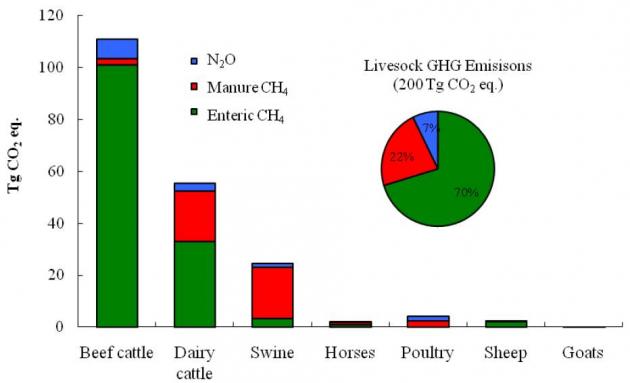
Greenhouse Gas Emissions from Livestock & Poultry – Livestock and ...
Primary Sources Of Greenhouse Gas Emissions In Dairy And Cattle Farming

Primary Sources of Greenhouse Gas Emissions in Dairy and Cattle Farming ...
Simulation And Prediction Of Greenhouse Gas Emissions From Beef Cattle

Simulation and Prediction of Greenhouse Gas Emissions from Beef Cattle
